In April 2026, I once again had the opportunity to photograph the array of colorful nebulae in the constellations Scorpio and Libra in Rooisand using a 50mm lens. A palette of colors created by stars, gas, and dust. Red emission
Read more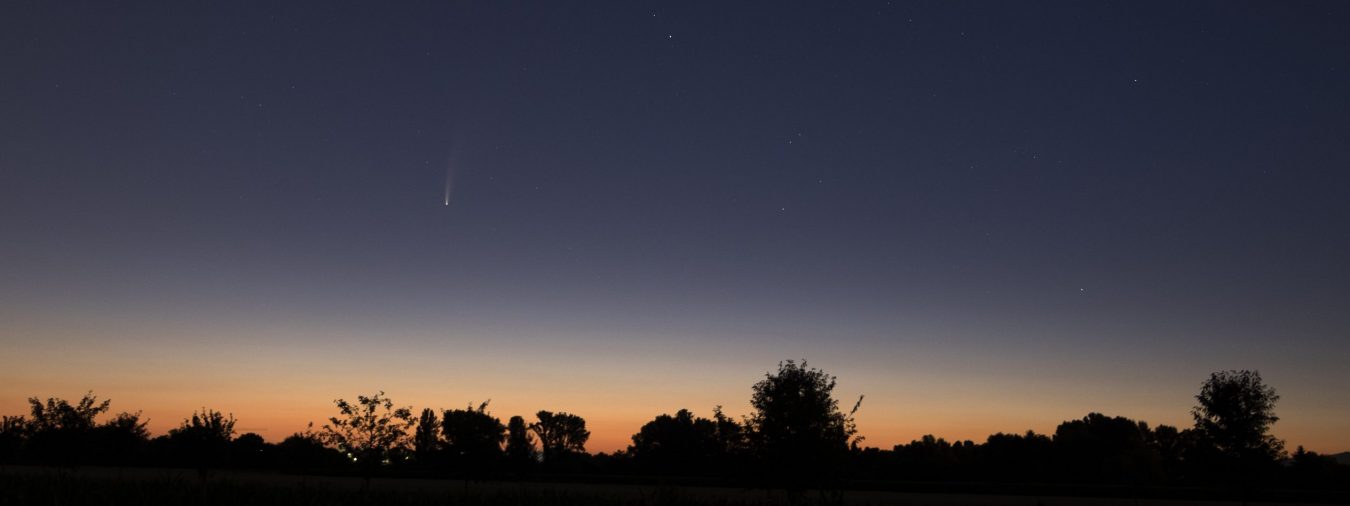
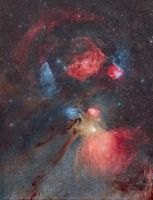
A Magic of Colors in Scorpio and Libra
Trifid Nebula – M20
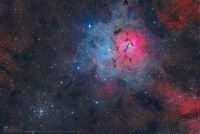
The Trifid Nebula (M20) is a rare combination of a red emission nebula, a blue reflection nebula, and dark dust lanes. An extremely hot, young multiple star at its center has so much energy that it causes hydrogen gas to
Read morePart of the Dark-Wolf-Nebula
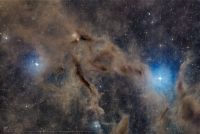
My image shows a small section of the Dark Wolf Nebula. This nebula, in turn, is part of the large molecular cloud in the constellation Lupus (the Wolf), about 500 times the size of our full moon and only about
Read moreDark Wolf Nebula – SL17
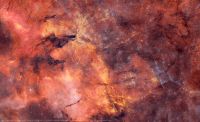
The Wolf Nebula, also known as the Fenrir Nebula (SL17), is a fascinating dark nebula in the constellation Scorpio, located just about 6,200 light-years away. It is a striking accumulation of cosmic dust that blocks the light of thousands of
Read moreSkull and Bones Nebula NGC2467
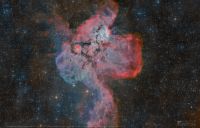
In my image, nebulae, numerous colorful stars, and star clusters form a vibrant portrait of the cosmos, also known as the Skull Nebula. At its center, in the bright white region at the top, lies a gigantic star. Just like
Read moreCosmic Bat Nebula NGC1788
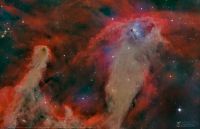
Two column-like dark clouds composed mainly of dust dominate my image. They are framed by glowing red hydrogen clouds. These dark clouds are illuminated by the many stars of the Milky Way, reflecting their light and thus becoming visible to
Read moreAngel Nebula NGC 2170
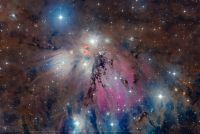
My colorful photo shows the Angel Nebula in the constellation Monoceros. A nebula complex that combines a mixture of the most beautiful types of nebulae. Bluish nebulae that reflect the light of nearby hot stars. Hydrogen clouds that are excited
Read moreLBN 878 and Barnard 35 in Orion
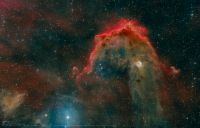
This beautiful combination of the dark cloud Barnard 35 and the brown and reddish glowing emission nebula LBN 878 framing it can be seen in the constellation Orion. Like other dark nebulae, Barnard 35 consists of interstellar gas and dust
Read moreNGC6603 and the small Sagittarius Star Cloud M24
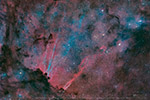
The center of our Milky Way is almost completely obscured from our view by interstellar dust and is therefore virtually invisible. But there is a small, tunnel-like window that allows us to see a particularly star-rich part of the Milky
Read moreMagical Colors in Scorpius and Ophiuchus

The constellations of Scorpius and Ophiuchus offer unique color magic in the night sky. The colors come from a mixture of gas and dust. Dust, which is illuminated by starlight and produces blue reflection nebulae. Gaseous clouds that produce reddish
Read more