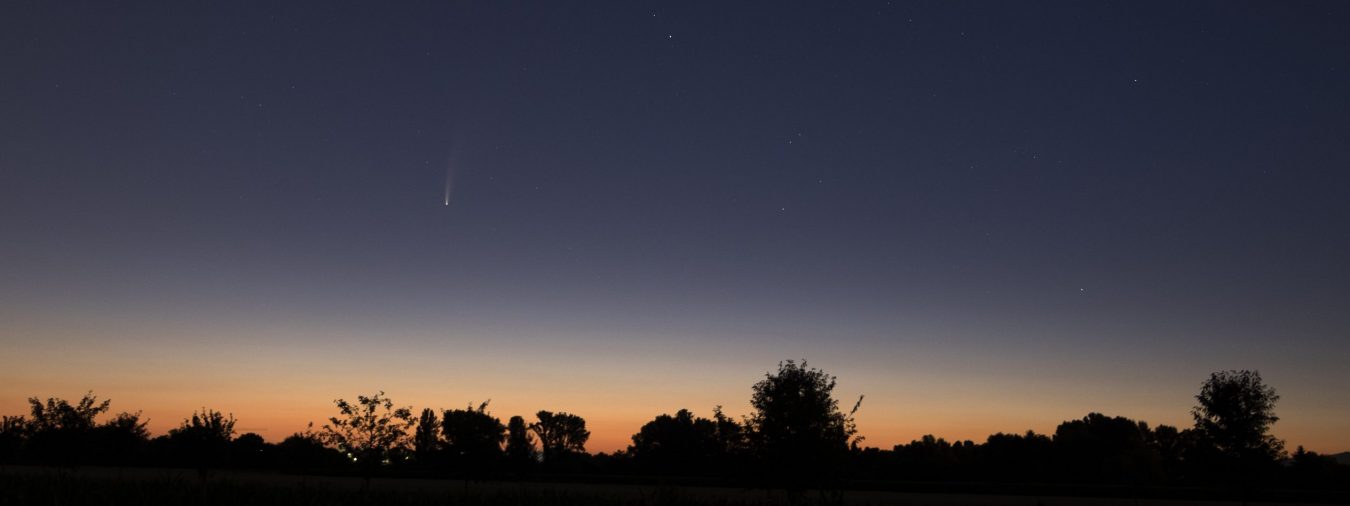

We’re excited to let you know that your image has been selected to be featured as the AAPOD2 Image of the Day on September 19, 2026 !
Finally, another solar eclipse in Europe—and one we could reach by car! It was obvious that millions of people would be traveling to the path of totality during the peak tourist season in August. That’s why we’d booked a hotel in Ribadeo on the Spanish Atlantic coast a year in advance. It was a compromise between the possibility of bad weather and the sun’s maximum altitude during the eclipse—about 10°—on the mainland. And unfortunately, the weather forecast for the coast was disheartening; in fact, on the morning of the eclipse, there was actually drizzle with no real prospect of improvement.
We had met up in Ribadeo with old friends with whom we’d also seen the 2024 solar eclipse in the U.S. And the evening before, as we discussed what to do next, a couple from Belgium joined us. But the decision was soon clear. Based on the weather forecast for the entire coast, we wanted to avoid any risk of clouds. After such a long journey to get there, we also wanted to drive the 250 km to León, further inland, and return at night. A couple we knew from the Carpe Noctem astronomy club in Meckesheim was also at a campground on the coast. They, too, would join us in León and bring along a new acquaintance from the campground to round out our group. And so we all ended up about 20 km west of León with a perfect view of the sunset,
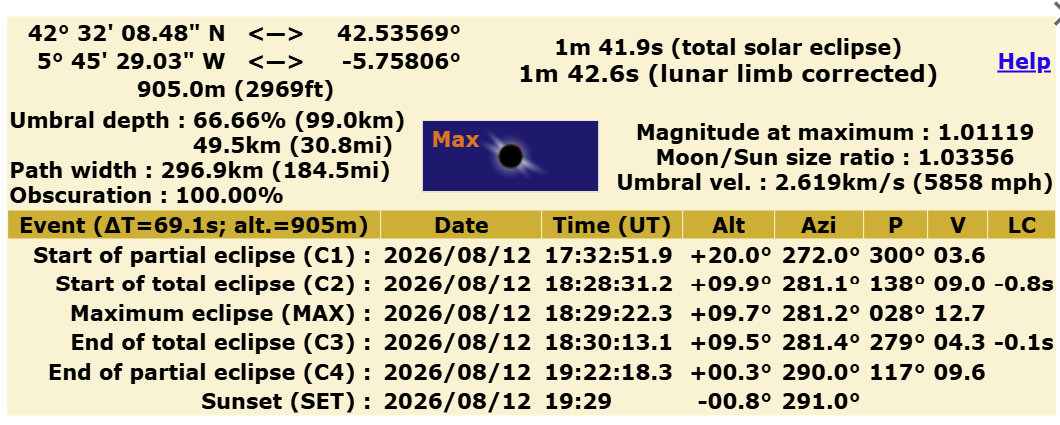
even if it was on the edge of an industrial area. However, there was a restaurant within walking distance, so we were able to enjoy a nice meal that afternoon.
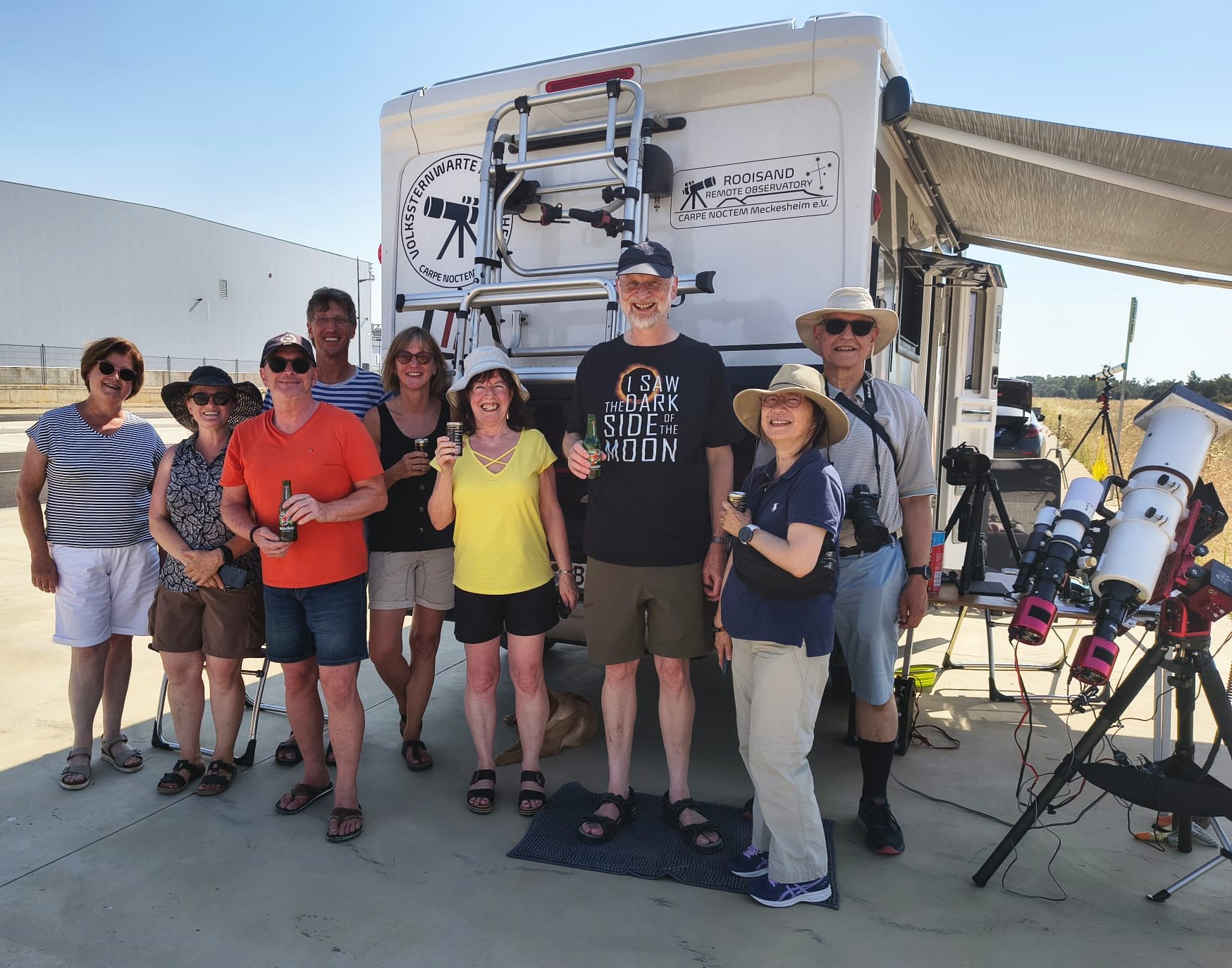
The preparations were soon complete; the equipment was set up and tested. And then the moment arrived. Around 7:30 p.m., the Moon passed in front of the Sun. Over the course of the next hour, the crescent of the Sun grew narrower and narrower. And then, for a few seconds, the last rays of light shone through the lunar valleys. Prominences suddenly sparkled in brilliant red. The corona—the Sun’s outer atmosphere—became visible. An extremely thin, hot plasma that extends millions of kilometers into space along the Sun’s magnetic field lines. A hundred seconds filled with awe. Suddenly it was over; a blinding beam of light dazzled us and expanded. And then the sun was back; a narrow crescent appeared and slowly grew larger. And we knew that the long drive from our hotel on the coast to León, Spain, had been worth it.
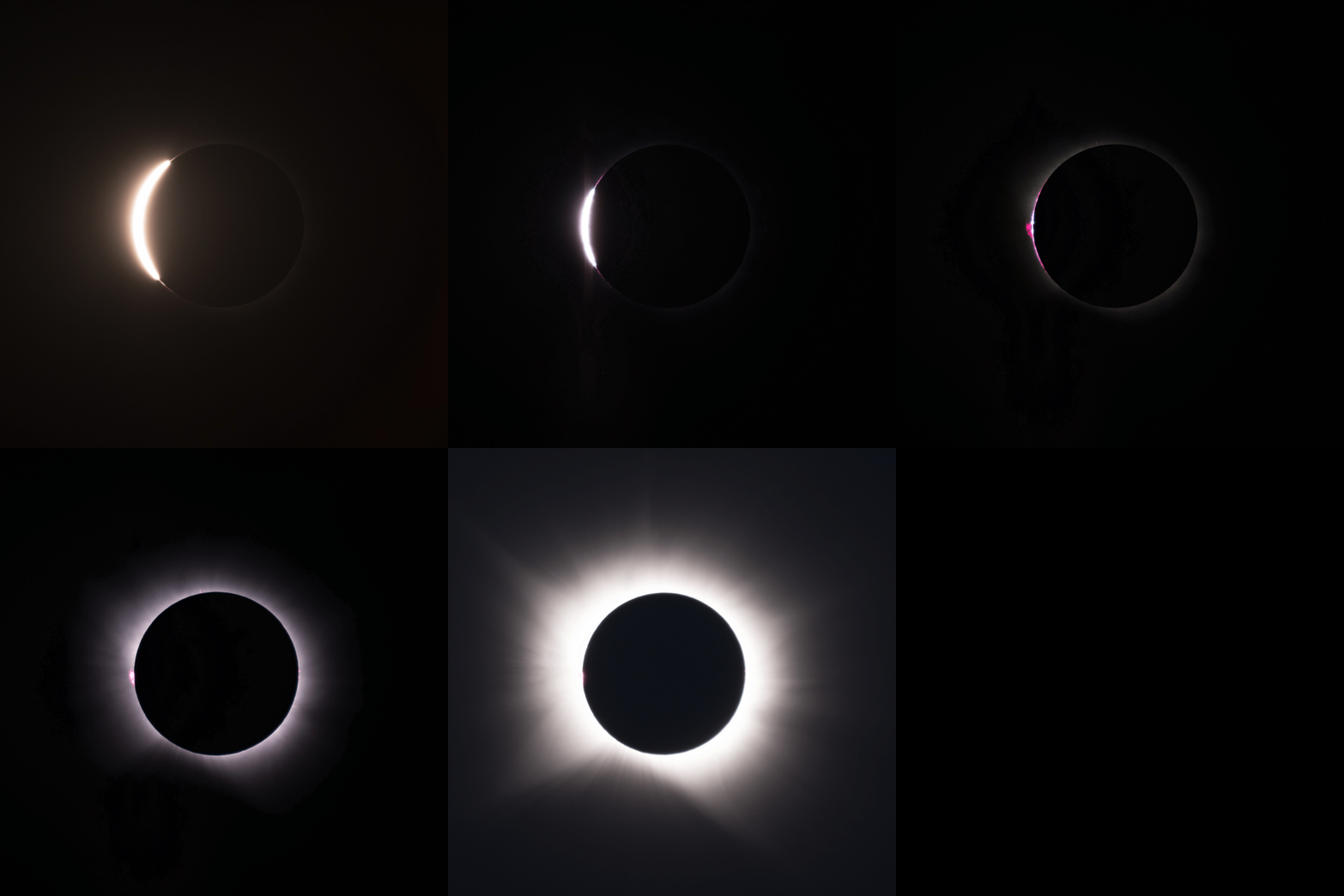
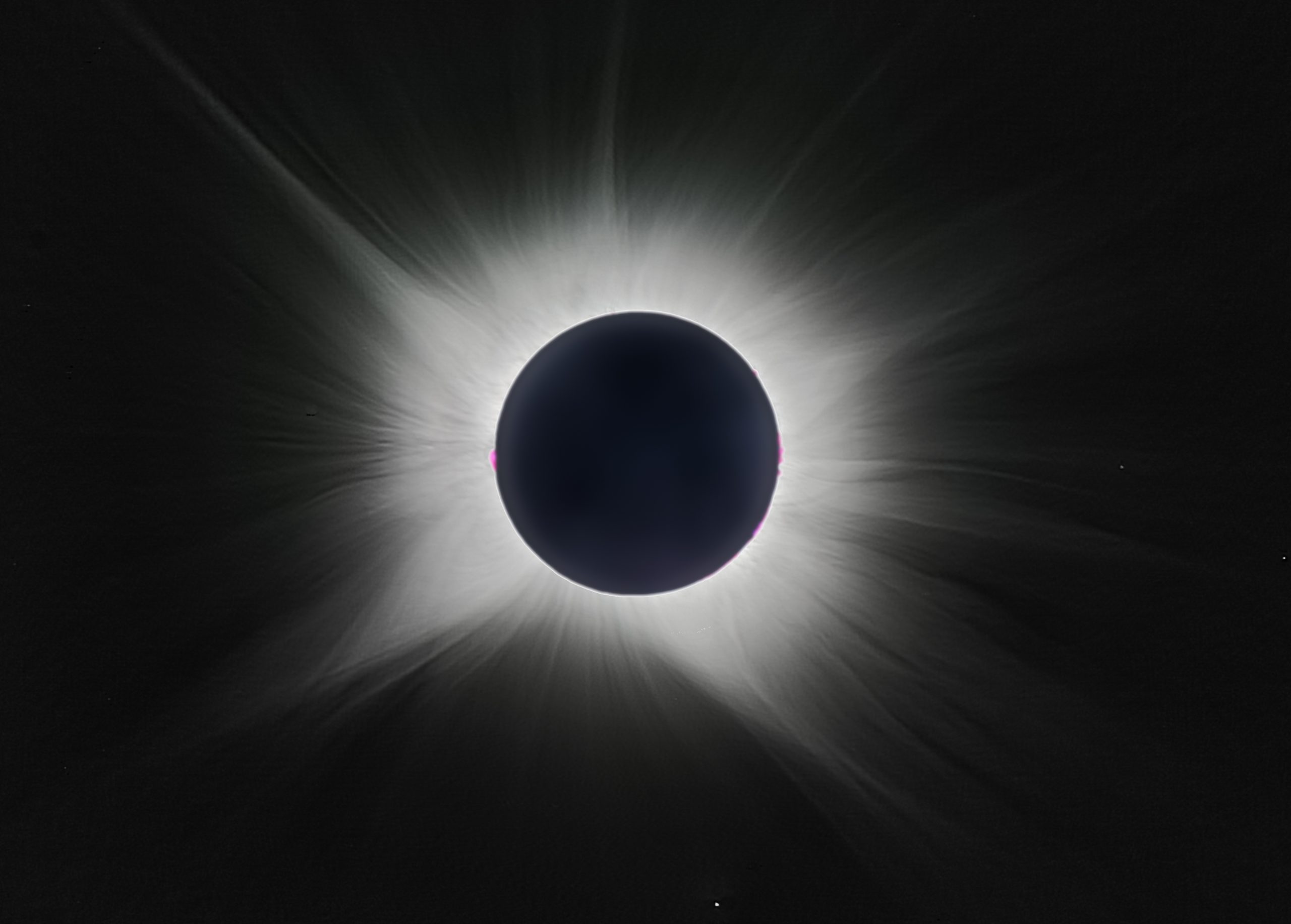
I have processed all 85 photos I took during the total eclipse into a single HDR (High Dynamic Range) image of the corona. This allowed me to capture both bright and dark areas in rich detail in a single image and bring out structures that are not visible to the naked eye. The shots were taken in 1 EV increments from 1/1000 to 1/2 second (up to 10 shots each at the same exposure time).
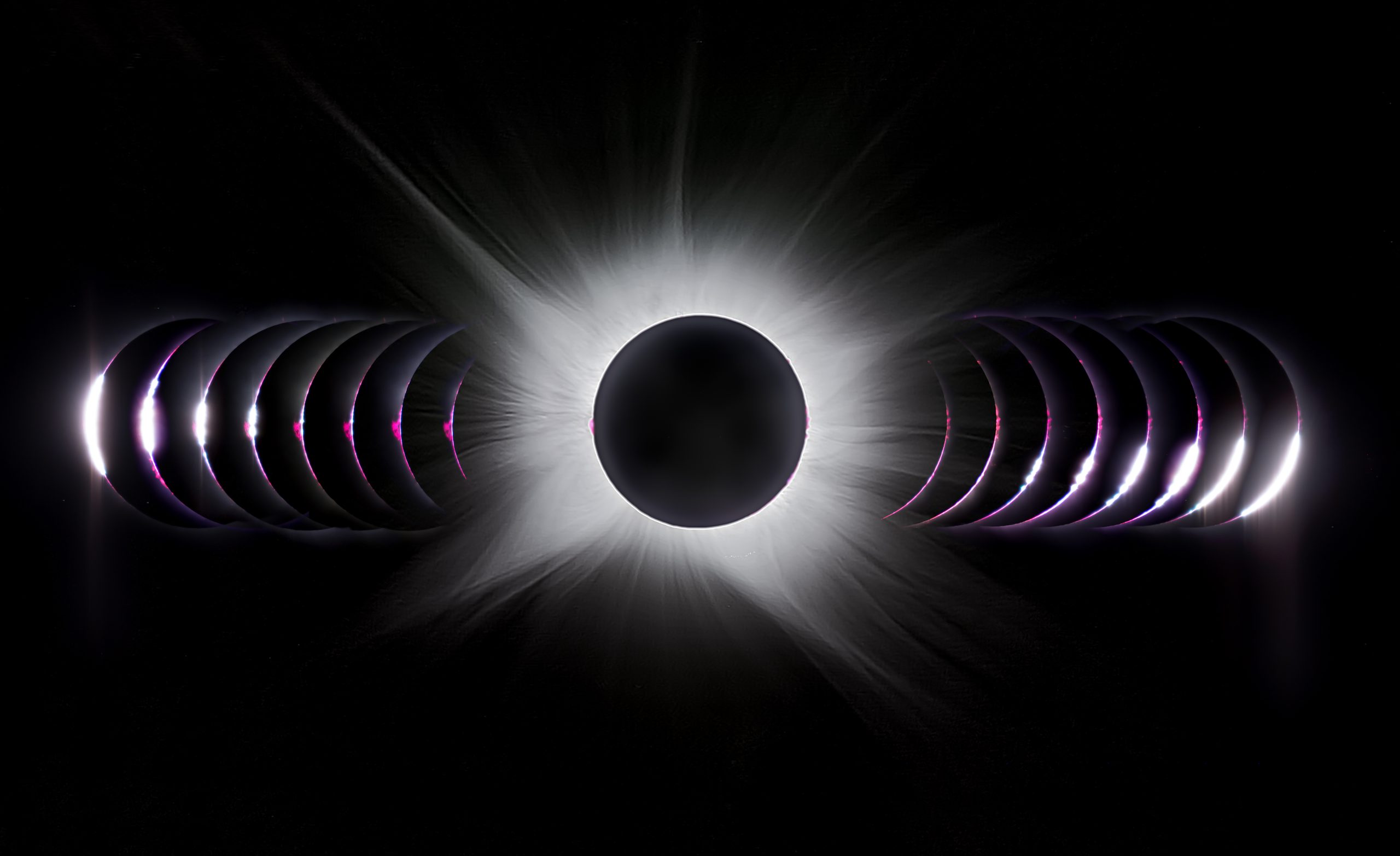
Additionally, I compiled the few seconds before and after totality into a sequence. The segments to the left and right of the corona last only a few seconds—12 seconds on the left and 6 seconds on the right.
Date
Location
Exposure Time
Telescope
Camera
12. August 2026
León, Spain
16 x 1/4000s + 80s
Imaging Star APO 320mm f5
Fuji X-S20