Embedded in a dense star field, NGC 6397 is one of the closest globular clusters to us. Its stars are only a few lightweeks apart, while the star closest to us is over four light years away. Globular clusters are
Read more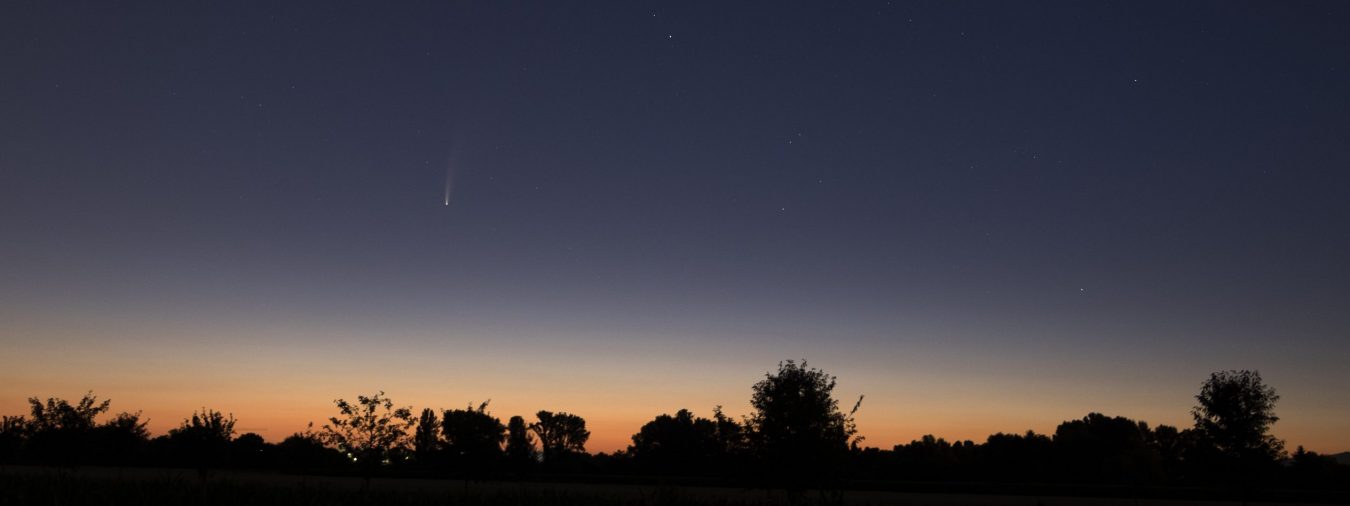
Globular Cluster NGC6397

Soap Bubble Nebula – PN G075.5+01.7
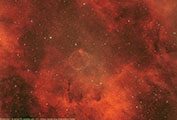
In the centre of the Swan lies a very faint nebula, the Soap Bubble Nebula. It is a transparent, almost perfect sphere and hangs in the night sky like a soap bubble floating in the wind. The soap bubble is
Read moreRunning Chicken – IC2944

My photo shows a bright nebula in the constellation Centaurus in the southern starry sky. With its characteristic shape, intertwined filaments, dark orbits and vivid colours, it is reminiscent of a running chicken. It consists mainly of hydrogen gas, which
Read morePerseids 2023

Every year in August, the most famous shooting stars flit across our night sky. The Perseids are named after their apparent origin, the constellation Perseus. They originate from comet 109P/Swift-Tuttle, which orbits the sun every 133 years and leaves a
Read moreCat’s Paw Nebula – NGC6334

My photo taken in Namibia shows the Cat’s Paw Nebula in Scorpius. It is one of the most active star-forming regions in our Milky Way. The red glowing emission nebula consists of individual patches of nebulosity that are separated from
Read moreDragons of Ara – NGC6188
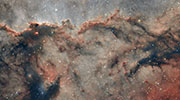
The battle of two dragons in the constellation Altar (Ara). However, their battle is only an illusion of dust and gas about 4000 light years away from us. The region is a very active star-forming region with young hot stars
Read moreCentaurus A
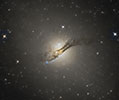
My photo, taken in Namibia, shows the fifth brightest galaxy in the sky. It is already recognisable in binoculars as a faint patch of nebulosity and is known as Centaurus A. It is surrounded by a lot of dust, which
Read moreVela Supernova – GUM16
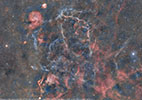
Around 11,000 years ago, a supernova exploded in the constellation of Vela. The explosion was so bright that our ancestors could see it in the daytime sky. The outer layers of the exploding star collided with the interstellar medium and
Read moreAnteater – NG6726
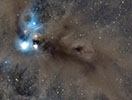
A seemingly bizarre complex of dust and gas appears with two bright blue reflection nebulae that complement the body of an anteater like bulging eyes. Weak legs spread out on either side. It also appears to be keeping an eye
Read moreCoalsack and Southern Cross
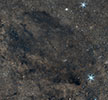
The Coalsack is probably the best-known nebula in our Milky Way that can be seen with the naked eye in the southern starry sky. It neighbors directly on the constellation “Southern Cross”, which stands out from the millions of other
Read more